Your roof is one of the largest investments in your home, and a little routine care goes a long way toward protecting it. Most roof problems start small. A lifted shingle, a clogged gutter, or a bit of moss near the eaves can sit unnoticed for months before it turns into a leak, a rotted deck, or an interior stain. The good news is that a smart roofing tips and maintenance routine catches these issues while they are still cheap to fix.
At Roof Masters & Exteriors in Indianapolis, we see the same avoidable damage year after year. Indiana weather is hard on roofs. Freeze-thaw cycles in winter, spring hail, summer heat, and heavy fall debris all take a toll. A roof that gets no attention in this climate tends to age faster than the same roof would in a milder region.
This guide walks through the maintenance habits that matter most, from seasonal checkups to gutter care, roof cleaning, leak response, and the difference between what you can handle yourself and what calls for a professional. Whether you own a shingle roof, a metal roof, or a flat commercial roof, the core principles are the same: watch for early warning signs, keep water moving off the surface, and address problems before they spread.
For deeper technical background on shingle care, the Asphalt Roofing Manufacturers Association offers homeowner resources on proper installation and maintenance. Below, we focus on the practical steps that protect your roof and your budget.
Why Roof Maintenance Matters
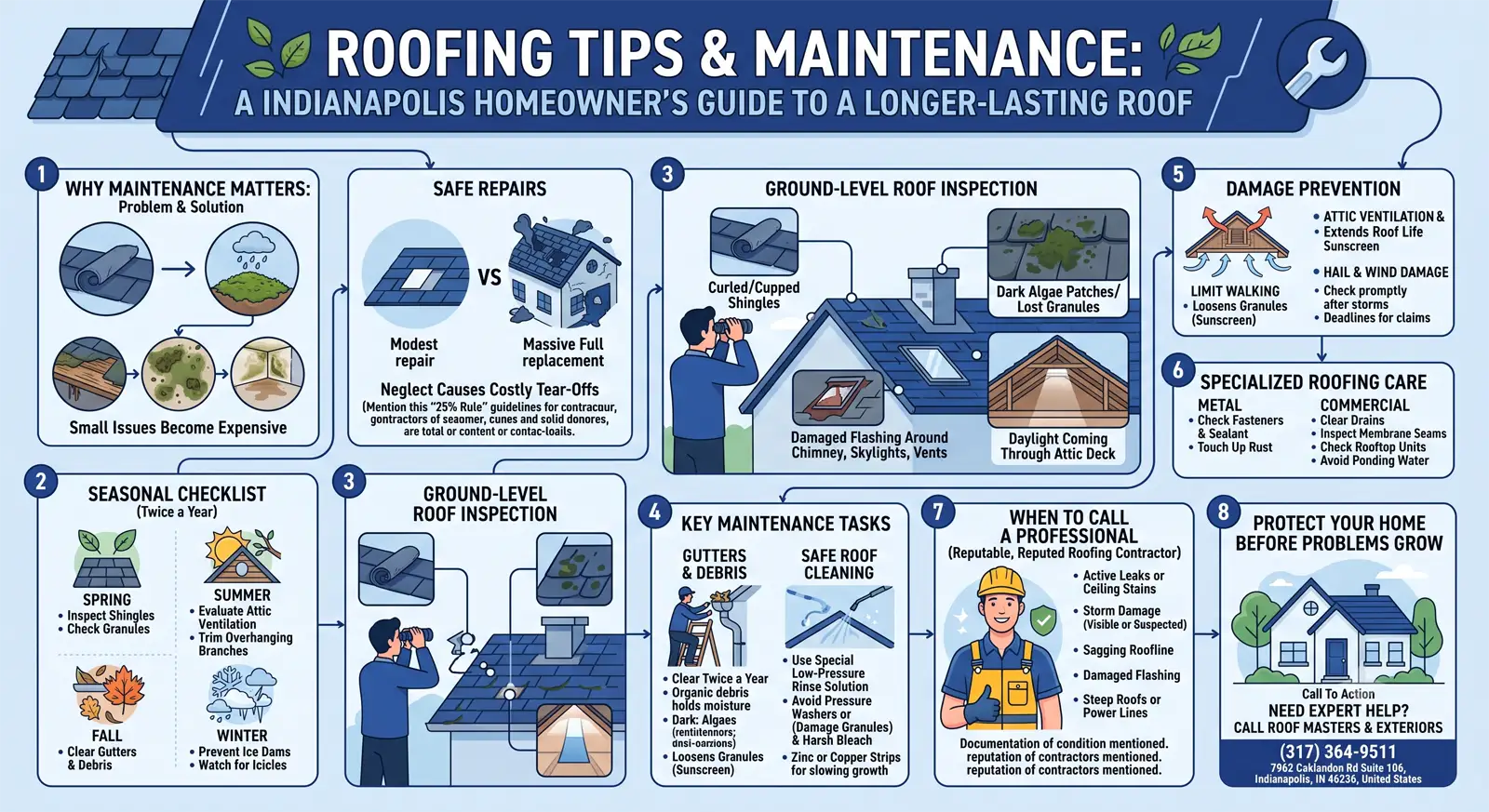
A roof is built to last, but “built to last” assumes basic upkeep. An asphalt shingle roof might carry a 25 or 30 year rating from the manufacturer, yet many roofs fall short of that number because no one ever cleared the debris, sealed the flashing, or fixed the small leak that let water into the deck.
Neglect is expensive. Water that gets past the shingles can rot the decking, soak the insulation, and feed mold inside the attic. What might have been a modest repair becomes a partial or full roof replacement. Consistent care protects the structure underneath and helps you reach the full service life you paid for.
You may have heard of the “25% rule” in roofing. The idea is a common guideline among insurers and contractors: when repairing more than about 25 percent of a roof, replacement often makes more financial sense than another patch, and some codes require a tear-off rather than an overlay past that threshold. Good maintenance is what keeps you on the repair side of that line for as long as possible.
Seasonal Roofing Maintenance Checklist
The simplest way to stay ahead of roof trouble is to tie maintenance to the seasons. Each part of the year brings a different threat, so a short seasonal routine covers most of what an Indianapolis roof needs.
| Season | Priority Tasks |
| Spring | Inspect for winter damage, check for lifted or missing shingles, clear gutters of debris, look for granule buildup in downspouts |
| Summer | Check attic ventilation and heat buildup, trim overhanging branches, inspect flashing and sealant around vents and chimneys |
| Fall | Clean gutters and downspouts, remove leaves and organic debris, confirm drainage flows away from the foundation |
| Winter | Watch for ice dams at the eaves, check for icicle buildup, monitor the attic for condensation and frost |
A twice-a-year rhythm, once in spring and once in fall, handles the bulk of this list. Add a quick look after any major storm, and you have covered the highest-risk moments of the year.
Roof Inspection Tips
A good inspection does not require you to walk on the roof, which is both dangerous and hard on the shingles. Much of what matters can be checked from the ground with binoculars or from a ladder at the roof edge.
Look for these signs:
- Curled, cracked, or cupped shingles, or shingles missing outright
- Dark patches on the roof surface, which can signal lost granules or trapped moisture
- Damaged flashing around chimneys, skylights, vents, and valleys, the most common entry points for water
- Daylight coming through the attic deck when viewed from inside
- Damp insulation or water stains on the underside of the roof
If you are not comfortable getting on a ladder, or you want a trained eye on the roof before buying or selling a home, a professional roof inspection gives you a documented condition report. Our team checks the parts of the system homeowners cannot see, and we flag issues while they are still small.
Gutter Cleaning and Debris Removal
Gutters do more for your roof than most homeowners realize. When they clog with leaves, twigs, and shingle granules, water backs up under the roof edge, rots the fascia, and can force its way into the soffit and attic. In winter, that trapped water is a leading cause of ice dams.
Clear your gutters at least twice a year, and more often if your home sits under mature trees. Flush the downspouts to confirm water flows all the way out and away from the foundation. While you are up there, brush off any leaves, pine needles, or branches resting on the roof surface. Organic debris holds moisture against the shingles and gives moss a place to take hold.
If your gutters sag, leak at the seams, or overflow even when clean, they may be undersized or worn out. Upgraded gutter installation can solve drainage problems that no amount of cleaning will fix.
Roof Cleaning: Moss, Algae, and Common Mistakes
Those dark streaks on a roof are most often algae, and the fuzzy green patches are moss. Both hold moisture, and moss in particular can lift shingles and work its way under them over time. On the north-facing and shaded sections of an Indianapolis roof, growth like this is common.
The safest way to treat algae and moss is a gentle approach: a low-pressure rinse with a cleaning solution made for roofs, applied from a ladder or by a pro, followed by patience while it works. Zinc or copper strips installed near the ridge can slow regrowth, since rainwater carries trace metal down the slope and discourages new growth.
The most common roof cleaning mistakes cause more harm than the moss or algae ever would:
- Pressure washing, which strips protective granules off asphalt shingles and drives water underneath them
- Harsh, undiluted bleach, which can damage plants and metal components around the roofline
- Walking a wet or steep roof, which invites a fall and loosens more granules with every step
When growth is heavy or the roof is steep, it is worth handing this task to someone with the right equipment and footing.
How Attic Ventilation Protects Your Roof
Good attic ventilation is one of the simplest ways to extend your roof’s life, yet it’s also one of the most overlooked. Intake vents along the soffits and exhaust vents near the ridge work together, pulling cool air in low and pushing warm, moist air out high. When that balance is off, heat and moisture build up under the deck instead of escaping.
In summer, trapped heat bakes the underside of shingles and speeds up the same cracking that UV exposure causes. In winter, it melts snow unevenly, a leading cause of ice dams. A hot attic in summer or frost on the underside of the deck in winter is a sign it’s time to have your ventilation checked.
Preventing Ice Dams on Roofs
Ice dams form when heat escaping from the attic melts snow on the upper part of the roof, and that meltwater runs down and refreezes once it reaches the colder eaves, where there’s no warm attic below to keep it liquid. The result is a ridge of ice that traps water behind it, and that trapped water has nowhere to go but under the shingles and into your home.
The root cause is almost always heat loss from the living space combined with poor attic ventilation, not the snowfall itself. Two things reduce the risk: adequate attic insulation, which keeps heat where it belongs, and balanced ventilation, which keeps the attic close to the outside temperature so snow melts evenly instead of from the top down. If you notice icicles forming along the eaves every winter, or a visible ridge of ice at the roof’s edge, that’s a sign your attic isn’t managing heat the way it should, and it’s worth having it evaluated before the next snowfall.
What Ruins Asphalt Shingles
Knowing what damages shingles helps you avoid shortening your roof’s life without meaning to. A few culprits stand out.
- Sun and heat: UV exposure and attic heat dry out the asphalt over the years and make shingles brittle, shortening their lifespan even without any storm damage.
- Poor attic ventilation: Trapped heat against the underside of the deck accelerates the same drying and cracking process, so a well-ventilated attic is one of the simplest ways to protect a roof.
- Foot traffic: Every trip across the roof loosens granules, and those granules are the shingle’s built-in sunscreen, so walking the roof more than necessary wears it down faster.
- Trapped moisture: Moss, debris buildup, or a clogged gutter holds water against the shingles and breaks down the mat beneath the surface over time.
- Hail and wind: A single Indiana storm can crack, bruise, or tear shingles in one afternoon, even on a roof that was otherwise in good shape.
The takeaway is simple: keep the roof clean, keep the attic ventilated, keep foot traffic to a minimum, and deal with storm damage before the next rain rather than waiting.
Handling Roof Leaks and Storm Damage
A leak seldom shows up at the point where water enters. Water travels along rafters and decking before it drips, so the stain on your ceiling may be several feet from the true source. That is why chasing a leak is best left to someone who knows how to trace it back to the flashing, valley, or nail pop that started it.
If you spot an active leak, contain the interior damage first. Move belongings, catch drips in a bucket, and if water is pooling above a ceiling, a small relief hole can prevent a larger collapse. Then get the roof looked at. Prompt roof repair is far cheaper than repairing the deck, insulation, and drywall that a lingering leak destroys.
Storms deserve special attention. After hail or high wind, the damage is not always visible from the ground, and insurers have deadlines for filing claims, often outlined in resources like the Insurance Information Institute’s guide on filing a homeowners claim. If your area took a hit, a prompt look at storm damaged roofing protects both your home and your ability to file a valid claim.
Metal Roofing Maintenance Tips
Metal roofs are low-maintenance, but low-maintenance is not no-maintenance. The care routine differs from shingles in a few important ways.
- Check fasteners and sealant: On exposed-fastener systems, the rubber washers under screws dry out over the years and back out, opening small holes for water.
- Inspect seams, ridges, and penetrations: These are the first spots on a metal roof to fail.
- Keep panels clear of debris, and rinse off dirt and pollen so the finish stays intact.
- Watch for scratches or scuffs in the coating that could start rust, and touch them up with the manufacturer’s paint.
A metal roof that gets this light attention can outlast several shingle roofs.
Commercial Roof Maintenance
Flat and low-slope commercial roofs need a different playbook than a home’s pitched roof. Water does not run off a flat roof the way it does a steep one, so drainage and membrane integrity are the whole game.
A commercial roof maintenance checklist centers on clearing drains and scuppers so water never ponds, inspecting the membrane seams and flashing for splits or lifting, and checking the seals around every rooftop unit, vent, and pipe. Ponding water is the enemy: it adds weight, accelerates membrane breakdown, and finds any weak seam. Building owners see the best results with a documented inspection twice a year and after major storms. Our commercial roofing team builds maintenance plans that fit the building and the budget.
When to Call a Professional Roofing Contractor
Plenty of maintenance is homeowner-friendly: cleaning gutters, clearing debris, and doing ground-level inspections. But some jobs belong to a licensed roofing contractor, both for safety and for the quality of the repair.
Call a professional roofer when you notice:
- Active leaks or water stains on the ceiling
- Storm or hail damage, visible or suspected
- Widespread granule loss in the gutters or downspouts
- A sagging roofline
- Damaged or lifted flashing
Anything that involves walking a steep or high roof, working near power lines, or handling structural questions is also a job for a pro. A qualified roofing contractor carries the insurance, the fall-protection equipment, and the training to do the work without adding damage, and a reputable one documents the condition of your roof so you know what you are paying for.
When you need a roofer in the Indianapolis area, Roof Masters & Exteriors handles inspections, repairs, storm response, and full replacements across the metro. You can learn more about our Indianapolis roofing services or reach us at (317) 364-9511 to schedule a look at your roof.
Protect Your Roof Before Small Problems Grow
A roof that gets steady, seasonal attention lasts longer, performs better, and saves you from the large repair bills that catch neglected roofs off guard. Build a simple routine, watch for the early warning signs in this guide, and bring in a professional for anything beyond a ground-level check.
If you would like an expert set of eyes on your roof, Roof Masters & Exteriors is here to help. Call (317) 364-9511, or contact our team to schedule an inspection. Have more questions? Visit our FAQ page, browse our project gallery to see completed work, or read customer testimonials from homeowners across Indianapolis & Central Indiana.
Roof Masters & Exteriors
Address: 7962 Oaklandon Rd Suite 106, Indianapolis, IN 46236, United States
Phone Number: (317) 364-9511
Google Maps: Find Us Here
Business Hours:
Monday: 8:00 AM To 5:00 PM
Tuesday: 8:00 AM To 5:00 PM
Wednesday: 8:00 AM To 5:00 PM
Thursday: 8:00 AM To 5:00 PM
Friday: 8:00 AM To 5:00 PM
Saturday: 8:00 AM To 12:00 PM
Sunday: Closed
FAQs About Roofing Tips & Maintenance
How often should I have my roof inspected in Indianapolis & Central Indiana?
Twice a year is a good baseline, once in spring and once in fall, with an additional check after any major hail or wind event. Homes under heavy tree cover or with roofs older than 15 years benefit from checking in more often.
Can I pressure wash my asphalt shingle roof?
No. Pressure washing strips the protective granules off asphalt shingles and can force water underneath them, which does more damage than the moss or algae it’s meant to remove. A low-pressure rinse with a roof-safe cleaning solution is the safer approach.
How do I know if my attic has a ventilation problem?
Signs include a noticeably hot attic in summer, frost or condensation on the underside of the roof deck in winter, and ice dams forming along the eaves after snowfall. A professional inspection can confirm whether your intake and exhaust vents are properly balanced.
Is it normal for a roof to have some moss or algae?
Some growth, especially on north-facing or shaded sections, is common in Indianapolis and not necessarily an emergency. However, moss should be treated before it lifts shingles, and heavy growth is worth addressing sooner rather than later.
How much does routine roof maintenance actually save homeowners?
There’s no fixed number, since it depends on the roof and the neglect avoided, but the general principle holds: a small repair caught early, a resealed flashing joint or a cleared gutter, almost always costs less than the deck, insulation, and drywall repairs that follow a lingering leak.
What should I do immediately after a hailstorm?
Avoid walking the roof yourself, since hail can bruise shingles in ways that aren’t visible from the ground. Schedule a professional inspection promptly, since most insurers set deadlines for filing storm damage claims.
How long should asphalt shingles last before I need to replace them?
Most asphalt shingle roofs are rated for 20 to 30 years, but consistent maintenance, clearing debris, sealing flashing, and fixing small leaks promptly, is what actually gets a roof to that full lifespan. Roofs that get no attention often fall well short of their rated years.
Do metal roofs need the same seasonal maintenance as shingles?
Not exactly. Metal roofs don’t need gutter-adjacent granule checks or moss treatment the way shingles do, but they do need regular fastener and sealant inspections, since exposed screws and seams are the most common failure points.
Do gutter guards eliminate the need for regular gutter cleaning?
No, though they reduce how often you need to clean. Gutter guards block larger debris like leaves and branches, but fine material like shingle granules and pollen can still build up underneath over time, so an occasional check is still worthwhile even with guards installed.